
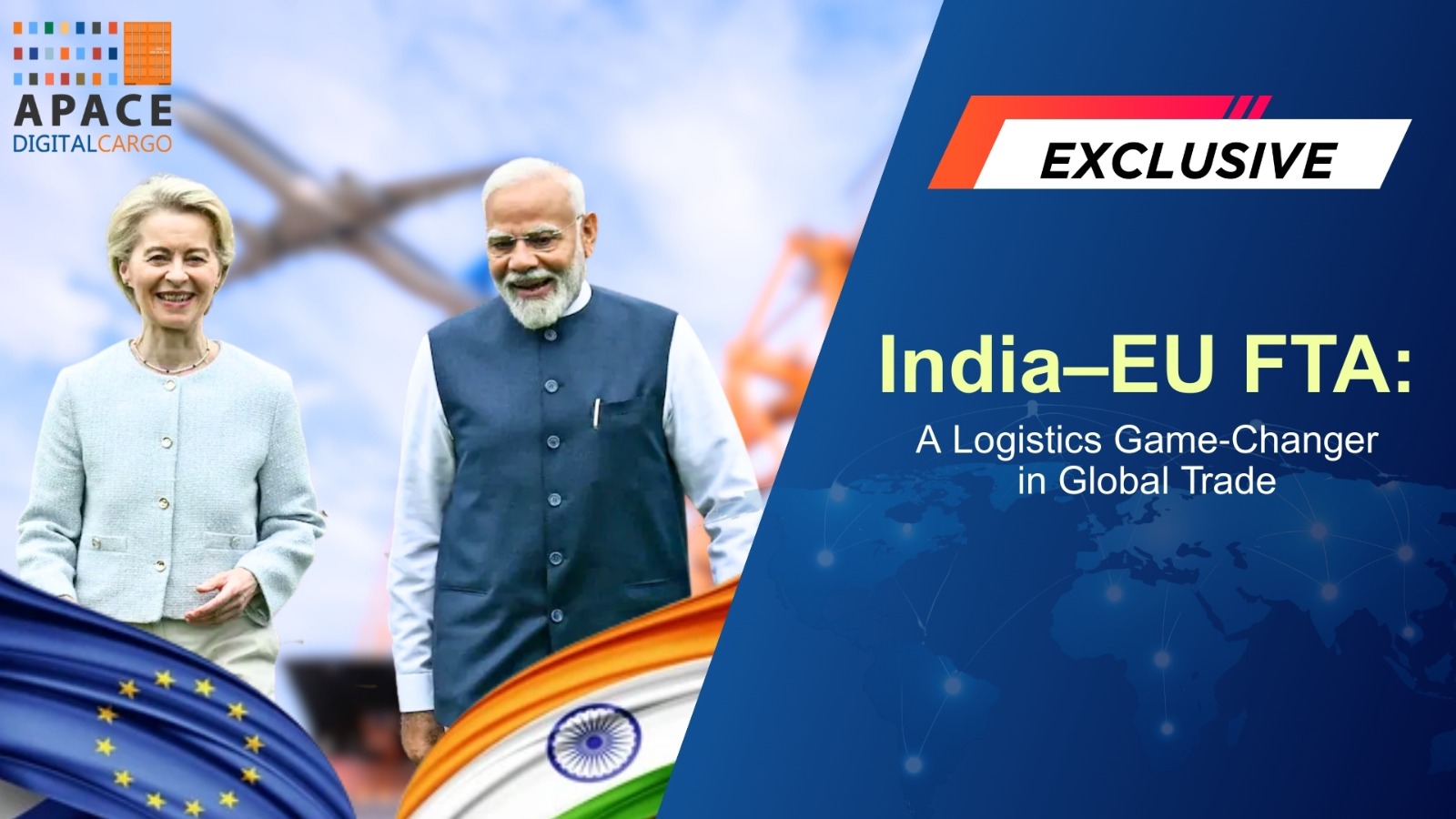
After nearly 18 years of negotiations, India and the European Union have finalised a landmark Free Trade Agreement (FTA) that negotiators and officials are calling the “mother of all trade deals.” The pact represents one of the most significant trade milestones for both economies, potentially reshaping global supply chains and creating new opportunities — and challenges — for the logistics industry.
What the Deal Actually Changes
1. Massive Tariff Cuts and Market Opening
-
The agreement will slash or eliminate tariffs on around 96–97% of goods traded between India and the EU by value, boosting bi‑lateral trade flows if fully implemented.
-
India will reduce tariffs on many EU imports, including automobiles, machinery, wine, olive oil, and chemicals. Likewise, the EU will eliminate or cut duties on nearly all major Indian exports such as textiles, leather, and marine products.
2. Automotive Sector Liberalisation
-
European car tariffs in India — previously as high as ~110% — will be gradually reduced to around 10% over time under the deal, with quotas on the number of vehicles that can enter at preferential rates.
3. Services, IP & Sustainability Chapters Included
-
Beyond goods, the FTA includes services liberalisation (e.g., financial, maritime), stronger intellectual property protections, and cooperative frameworks on climate and sustainable development.
4. Implementation Timeline
-
Legal scrubbing and ratification processes are underway in both regions, with formal signing expected in 2026 and implementation likely in 2027, subject to parliamentary approvals.
Why This Matters for Global Logistics
This FTA isn’t just a tariff story — it stands to shift large parts of the global logistics ecosystem:
1. Surge in Trade Volumes & Freight Demand
With tariff barriers lowered, trade volumes are expected to accelerate dramatically. Analysts project:
-
Indian exports to the EU could rise by USD 50 billion by 2031.
-
EU exports to India could potentially double by 2032.
Implications:
-
Sea freight will remain dominant for bulk and containerised goods (textiles, machines, chemicals).
-
Air cargo will grow faster for high‑value, time‑sensitive shipments like automotive parts, electronics, and medical devices.
-
Express logistics providers will be under pressure to enhance last‑mile capabilities to handle increased retail and B2B flows.
2. Reshaped Supply Chain Footprints
Production & Distribution Hubs
European manufacturers may repurpose India as a regional supply hub, especially in automotive components and machinery, to serve not only the Indian market but also South and Southeast Asia.
3PL & 4PL Expansion
Third‑party and integrated logistics players (3PL/4PL) will likely expand service offerings — from bonded warehousing to customs brokerage and trade‑compliance advisory — to support complex movement of goods under FTA rules.
3. Customs, Trade Compliance & Documentation Complexity
While tariffs fall, non‑tariff barriers and regulatory compliance remain substantial:
-
Rules of Origin and quota management (e.g., for vehicles) require meticulous documentation.
-
Enhanced services sector access means freight and shipping companies must navigate varied regulatory standards across financial and professional services sectors.
Operational Impact:
-
High demand for digital trade‑facilitation platforms and integrated TMS (Transport Management Systems).
-
Automation of customs clearance processes will become more crucial to avoid delays and demurrage costs.
4. Infrastructure Stress Points
Even as opportunities rise, logistics infrastructure must keep pace:
-
Ports and terminals could face congestion without capacity upgrades.
-
Intermodal connectivity (rail‑to‑port, road networks) will be critical to achieve efficiency and meet delivery timelines.
Public–private partnerships and investment in dry ports, cold chains, and multimodal corridors will become central to realising FTA‑driven trade gains.
Silver Lining: A Watershed Moment for Logistics
The India–EU FTA ushers in a new era of high‑volume, diversified trade corridors between Asia and Europe. While tariff cuts are headline grabbers, the real transformation lies in complex shifts across freight patterns, supply chains, and logistical infrastructure demands.
For global logistics players — from carriers and freight forwarders to digital freight startups — this means:
-
Re‑engineering cross‑border logistics models
-
Investing in digital and compliance capabilities
-
Preparing infrastructure for sustained demand growth
-
Aligning sustainability strategies with regulatory expectations
In short, the deal accelerates India’s integration into global value chains — but the winners will be those who adapt logistics operations swiftly and smartly to seize the expanded opportunity.